

Flexible online learning options offering 18 or 36 hours of CE/CME.
Online CE/CME Programs
Flexible online learning options offering 18 or 36 hours of approved accredited CE/CME.
CHECK BACK SOON!
Thank you for making our 2026 Live Virtual Conference such a meaningful experience.
We're preparing new programs, resources, and future events.
Coming Soon!
-
Description
In 1913, Carl Jung undertook a profound inner journey into the unconscious, an experience that became foundational to his life’s work and the development of analytical psychology and active imagination. Central to this legacy is the understanding that the soul, body, and psyche are inseparable. Yet the embodied soul has been relegated to the cultural shadow.Drawing on contemporary the neuroscience of Iain McGilchrist, participants will examine how the embodied soul including emotion, imagination, the somatic unconscious, and subtle body have been culturally and clinically devalued, and the implications of this split for psychological health.
Through Jungian theory and clinical vignettes, this session introduces active imagination as a method for engaging the embodied soul and facilitating psychological integration. Participants will be shown how this approach can be applied to therapeutic work and support healing.
Learning Objectives: At the end of this presentation, participants will be able to:
1. List at least two factors contributing to the marginalization of the body in Western culture and their clinical implications.
2. Discuss Carl Jung’s concept of embodied active imagination.
3. Identify the healing power of the method of embodied active imagination in clinical practice
Erica Lorentz, MEd, LPC, is a Diplomate Jungian Analyst (IAAP) and author of Body as Shadow: Jung’s Method of Embodied Healing (Karnac, 2026). She is a training analyst at the C. G. Jung Institute of New England and has served as Curriculum Coordinator and Training Board Member. She has also been a training analyst with the Inter-Regional Society of Jungian Analysts and adjunct faculty at Antioch School of Professional Psychology.
Since 1986, Ms. Lorentz has maintained a private practice working with individuals, couples, and groups. She has lectured and led workshops throughout the United States, Canada, the United Kingdom, and India, including recent presentations on decolonizing mental health. Her work has been featured on Pacifica Radio and the Jung Platform. Her clinical and teaching focus centers on the embodied mythopoetic process and the inter-active field in analysis.
Her exploration of Jung’s embodied active imagination process began in 1975 through the study of Authentic Movement with Janet Adler.
-
Description
Imagination and creativity are not talents reserved for the gifted few. They are powerful, learnable skills available to every one of us. Whether you are a clinician, educator, or simply someone curious about the human mind, this session will transform the way you think about two of our most essential and extraordinary human abilities.Drawing from neuroscience, positive psychology, and philosophy, Dr. Sheila Pontis takes us on a fascinating journey through the science of imagination and creativity. Discover what Salvador Dalí and Michael Faraday had in common, how the brain generates creative thought, and why these abilities are essential to our mental and physical well-being. Not just in the studio or laboratory, but in the therapy room, the hospital, and everyday life.
This session offers practical, evidence-based strategies for bringing creative thinking into both clinical care and everyday life. From the therapy room to your own personal journey, cultivating imagination and creativity has the power to transform patient outcomes and deepen human connection. It can also reignite your professional purpose and awaken a creative potential you never knew you had.
Learning Objectives: At the end of this presentation, participants will be able to:
Discuss the distinction between imagination and creativity
Explain the role of imagination in supporting creative thinking.
Identify the evidence-based health benefits of deliberate imaginative and creative practice.
Sheila Pontis, PhD is an interdisciplinary researcher, educator, and practitioner whose work sits at the crossroads of imagination, design, and human flourishing. Originally trained as a graphic designer in Buenos Aires and holding a PhD in Information Design from the University of the Arts London, she has spent over two decades exploring how people think, learn, and create — and how those capacities can be deliberately cultivated.
She has held faculty positions at MIT, Princeton University, and Northeastern University, among others, where she led graduate programs, and designed and taught courses on creativity, imagination, well-being, design, and human-centered research. Her teaching philosophy is grounded in the belief that imagination is not a talent reserved for artists — it is a fundamental human capacity that can be nurtured in anyone.
Sheila's recent work bridges positive psychology, behavioral science, and design education. She has completed advanced training at the University of Pennsylvania's Positive Psychology Center, Harvard's T.H. Chan School of Public Health, and Yale's Science of Well-Being program. She is also a certified yoga teacher and brings somatic and mindful practices into her work with learners and organizations.
As founder of Imagination for Human Flourishing, she develops workshops, courses, and research that empower individuals and communities to harness their imaginative abilities — to dream, to play, and to address life's challenges more creatively. She is also faculty at the School of Radical Imagination, where she teaches courses on imagination, optimism, and being human. Her work asks a simple but radical question: What becomes possible when we take imagination seriously? -
Description
For thousands of years, contemplative practitioners have discovered that sitting in stillness and presence does something unexpected: it generates creative expression of unusual depth and beauty in the form of poetry.From the dohas of medieval North India to the enlightenment songs of Tibetan masters, from the verse of Chinese monk-poets to the death poems of Zen teachers, this connection runs through the heart of every major contemplative tradition. The poem emerges from within the meditation rather than being added to it.
What all of these traditions share is a realization that the practice of meditation opens up a quality of perception, a kind of attention, and a relationship to language distinct from ordinary consciousness.
Drawing on a lifetime of Buddhist contemplative study, the neuroscience of stillness, and direct experience of the practice, Polly Ryan and Robert Thomas will explore sitting as a fundamental human creative act, one with deep centuries-old roots, urgent contemporary relevance, and the capacity to generate meaning, connection, and beauty in an increasingly fragmented world.
This presentation introduces a contemporary practice of sitting together and collective poetry, a living experiment in how pausing intimately together with others creates the conditions for shared expressive emergence.
Learning Objectives
Upon completion of this session, participants will be able to:
Describe the relationship between meditation practice and poetic expression in contemplative traditions.
Describe the psychological and physiological benefits of stillness and mindful presence for both helping professionals and clients.
Explain neuroscientific findings that support creativity emerging from contemplative stillness.
Apply the practice of sitting together and collective poetry in clinical or group settings.
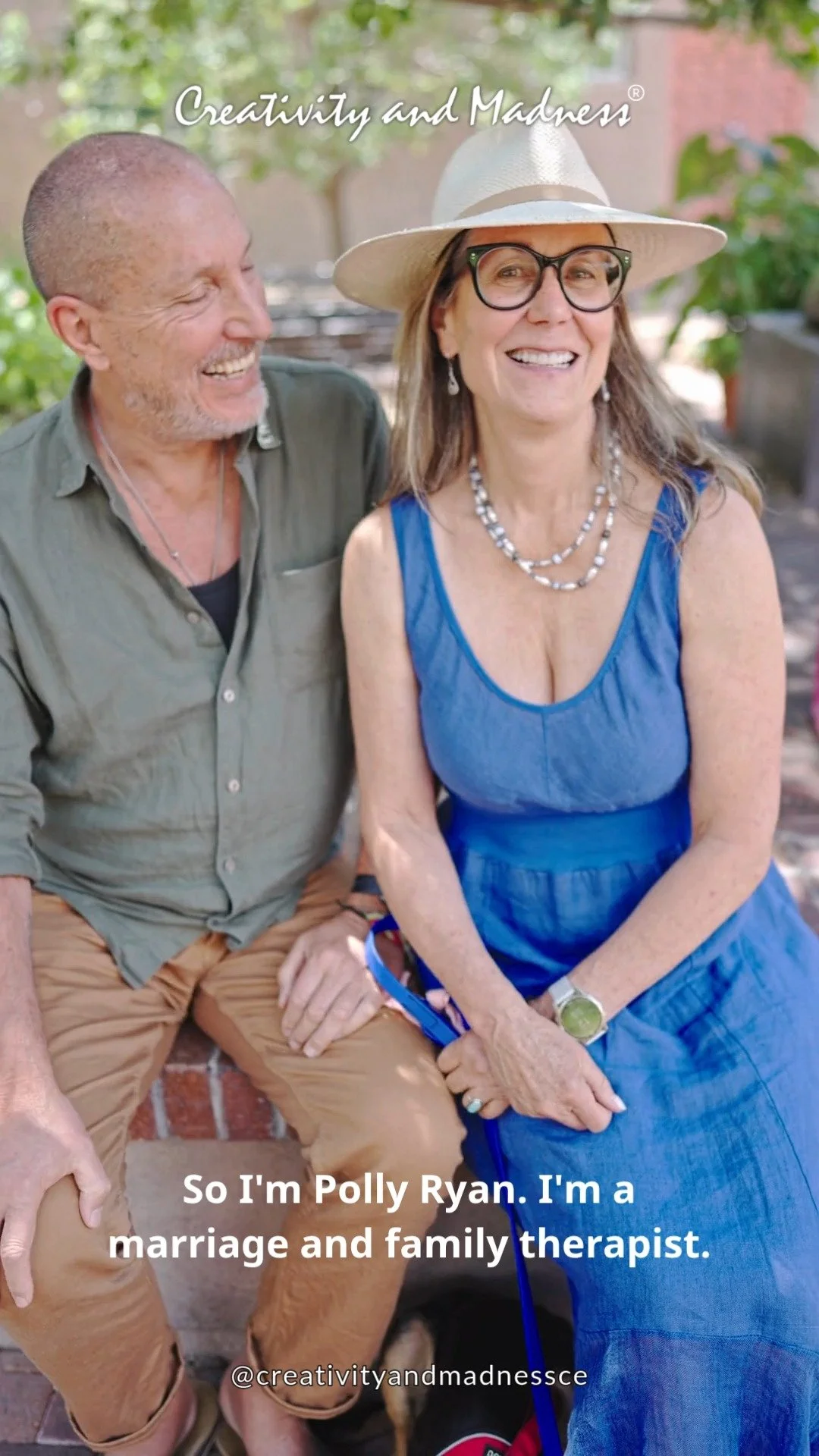
Polly Ryan is a licensed marriage and family therapist, meditation teacher, and grief educator based in Truckee, California and Santa Fe, New Mexico. She holds degrees in music performance, music therapy, and counseling psychology and has been a licensed therapist in California and Nevada for over 40 years. She is the founder of InnerAction Therapy, offering counseling and personal development to individuals, couples, and families.
Polly’s clinical approach is trauma-informed and integrative, drawing on EMDR, somatic awareness, parts work, polyvagal theory, and Feeding Your Demons, a therapeutic method she is certified to teach. Her work goes beyond traditional talk therapy, combining evidence-based psychological tools with contemplative wisdom to support deep, lasting transformation.
Polly is a devoted student of Lama Tsultrim Allione and Lama Alan Wallace and has received teachings from many great Tibetan and Bhutanese teachers. She serves as a senior teacher (Lopön) and spiritual mentor at Tara Mandala Retreat Center, where she has taught numerous in-person and on-line retreats. In 2023 she co-led pilgrimages to Bhutan and India.
Polly founded the Northern Sierra and Santa Fe Tara Mandala Global Sanghas where she offers in-person and on-line practice and study. She is also co-founder of Sitting Lab with her partner, Robert Thomas, and brings to this work a lifelong commitment to the integration of contemplative practice, creative expression, and psychological healing.
After the death of her 21-year-old son in 2023, she has immersed herself in the grief work of Mirabai Starr and David Kessler and completed her Grief Educator Certificate in 2024. She created LoganIsLove!: A Mother’s Bereavement Circle as a tribute to her son’s life.
Robert Thomas began practicing meditation in 1993 as a novice monk at Wat Pah Nanachat, a renowned Thai forest monastery. He went on to dedicate his life to contemplative practice, spending six years as a monk at Tassajara, the first Buddhist monastery in America, founded by Shunryu Suzuki Roshi.
He attained the highest level of ordination in Soto Zen, receiving Dharma Transmission from his teacher, Norman Fischer, in 2009, and spent 22 years as a Zen priest and teacher-in-residence at the San Francisco Zen Center, Upaya Zen Center, and the Austin Zen Center.
Robert is also the former CEO of three groundbreaking organizations: the San Francisco Zen Center, Mindful Schools, and the Tara Mandala International Buddhist Community. In 2024, he founded Sitting Lab, an online platform supporting people in establishing a regular and deepening meditation practice.
He lives in Santa Fe, New Mexico, with his partner, Polly Ryan, and he spends his time writing, making art, walking his dog, and helping people practice meditation.
-
Description
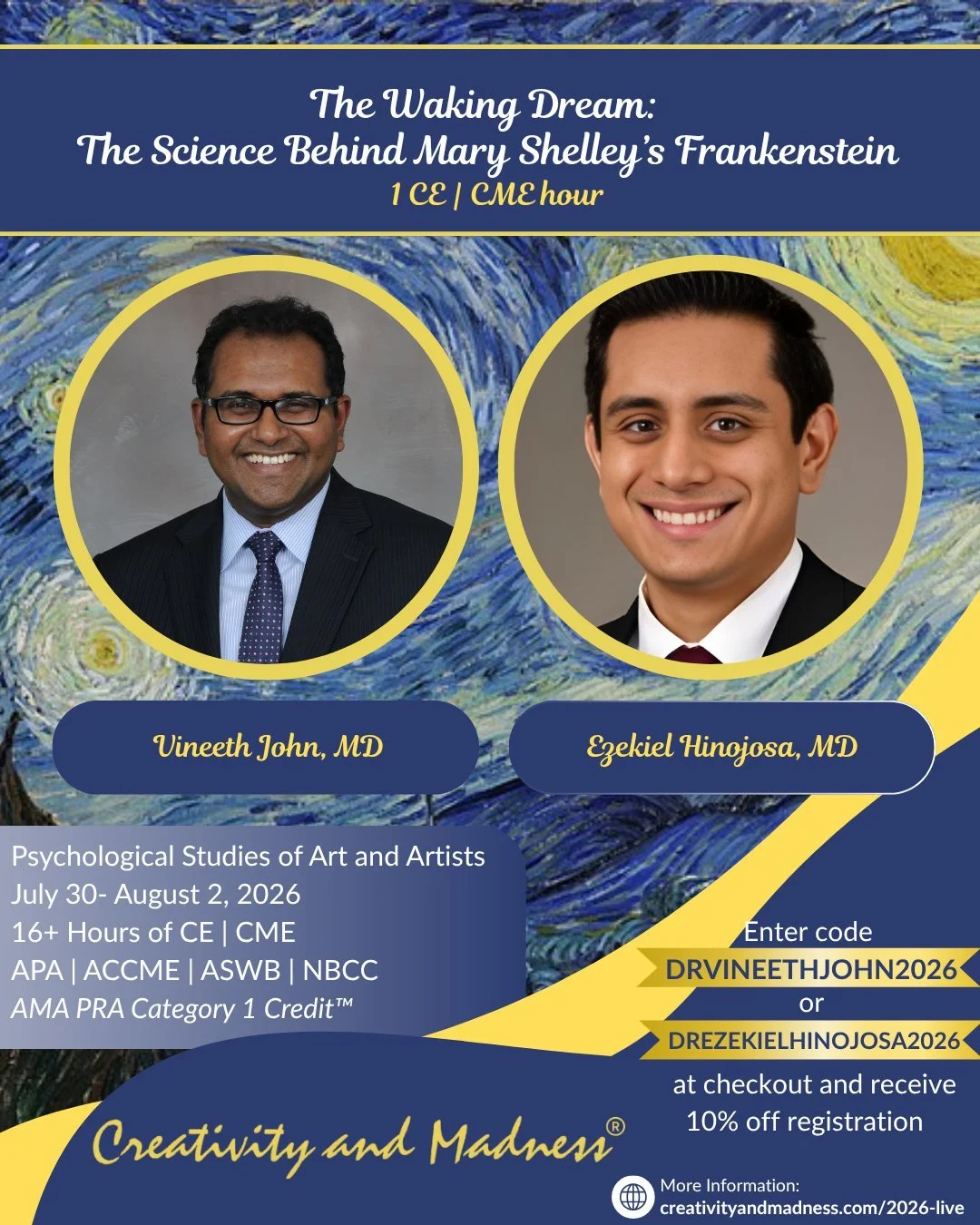
In the stormy summer of 1816, an eighteen-year-old Mary Shelley had a dream that changed literature forever. From that single visionary moment emerged Frankenstein, one of history's most enduring explorations of imagination, creation, and the boundaries of human invention.In this richly illustrated lecture, Dr. Vineeth John and Dr. Ezekiel Hinojosa trace the psychological, neuroscientific, and cultural forces that gave birth to Frankenstein. Drawing from Shelley's own journals and the novel itself, he explores how grief, intellectual rivalry, scientific discovery, and cultural upheaval converged to ignite one of the most extraordinary acts of creative imagination ever recorded.
Through contemporary models of creativity including the Wallas four-stage process, the 4P framework, and the Brandt and Eagleman model of Bending, Breaking, and Blending, this session reveals how Shelley's waking dream exemplifies the interplay between emotion and cognition at the heart of every creative breakthrough. Recent neuroscience findings on the Default Mode Network, daydreaming, and the "aha" moment bring her story into startling modern focus.
Frankenstein is reimagined here not only as a literary masterpiece, but as a timeless case study in the psychology of invention. A reminder that genius can emerge from solitude, sorrow, and wonder.
Learning Objectives: At the end of this presentation, participants will be able to:
Describe major psychological and neurocognitive models underlying creativity.
Analyze Mary Shelley's creation of Frankenstein through modern frameworks of innovation and insight.
Evaluate the dynamic relationship between imagination, crisis, and the creative process.
Vineeth P. John, MD, MBA, is a double board-certified psychiatrist specializing in geriatric psychiatry, currently based in Houston, Texas. He serves as the John S. Dunn Professor in the Louis A. Faillace, MD, Department of Psychiatry and Behavioral Sciences at McGovern Medical School at UTHealth Houston, where he also holds the role of Vice Chair for Education and Director of the Geriatric Psychiatry Program. His clinical interests span adult general psychiatry, bipolar disorder, depression, schizophrenia, and the psychiatric care of older adults.
A passionate advocate for creativity in medicine and education, Dr. John has dedicated his career to cultivating learning environments enriched with openness, creative problem solving, and innovative thinking, believing these conditions are the foundation for extraordinary scholarship and discovery. Over the past decade, he has also been studying the effect of disruptive styles of leadership in organizations, presenting his research at national and international conferences.
Dr. John earned his medical degree from the Christian Medical College and Hospital in Vellore, India. He completed his psychiatry residency at Tufts Medical Center in Boston and his fellowship in geriatric psychiatry at the University of Miami Leonard M. Miller School of Medicine at Jackson Memorial Hospital. He holds a Master of Business Administration from the University of Pittsburgh Joseph M. Katz Graduate School of Business.
Throughout his career, Dr. John has held academic leadership positions at the University of Pittsburgh Medical Center, the University of Miami Miller School of Medicine, the University of Wisconsin School of Medicine and Public Health, and the University of Rochester School of Medicine and Dentistry. He is board certified by the American Board of Psychiatry and Neurology in both psychiatry and geriatric psychiatry and is actively involved in psychiatric education and training initiatives at the national level.
Ezekiel Hinojosa, MD, is a fourth-year psychiatry resident in the Louis A. Faillace, MD, Department of Psychiatry and Behavioral Sciences at McGovern Medical School at UTHealth Houston. He earned his MD from McGovern Medical School at the University of Texas Health Science Center at Houston in 2022, and his BS in Biology and Psychology, magna cum laude, from Texas A&M University in 2018, where he was a recipient of the National Hispanic Scholarship Fund and the Texas A&M Century Scholarship.
Dr. Hinojosa has demonstrated exceptional academic achievement throughout his training, earning the Psychiatry Residency PRITE Award in each of his first three years of residency. He has been selected by his program director to lead the residency's APA MindGames team and was chosen by forensic psychiatry fellowship leadership to assist in developing a forensic psychiatry clinical track within the residency program. His research background spans phospholipid signaling in tumor cells, circadian rhythm and genetics, and medical informatics, with publications in peer-reviewed journals including the Journal of Cell Science and BMC Medical Informatics and Decision Making.
A dedicated educator and mentor, Dr. Hinojosa has developed and delivered numerous lectures and case conferences throughout his training, with a particular commitment to building the next generation of psychiatric clinicians. His co-presentation with Dr. Vineeth John at the Creativity and Madness 2026 conference reflects his growing interest in the intersection of psychiatric science, human experience, and the creative mind.
-
Description
What happens at the edge of life? And what can those who have returned tell us about consciousness, healing, and what it means to truly live?Near-death experiences (NDEs) have been reported across cultures, throughout history, and by some of the most celebrated minds in science, literature, and the arts. From Carl Jung's vision of Earth from space during a 1944 heart attack, to Sharon Stone's transformative experience following a brain hemorrhage, to Ernest Hemingway's out-of-body encounter on a WWI battlefield, NDEs have inspired, challenged, and forever changed those who lived them.
In this compelling session, Dr. Mitchell Liester invites participants into one of the most fascinating frontiers of modern consciousness research. Drawing from neuroscience, psychology, and the lived accounts of artists, writers, scientists, and visionaries, this presentation explores what NDEs can teach us about the nature of consciousness and the extraordinary capacity of the human mind to heal, transform, and find meaning.
For clinicians, the implications are profound. NDE survivors consistently report reduced death anxiety, increased compassion, diminished materialism, and a deepened sense of purpose. These transformations offer powerful insights for therapeutic approaches to existential distress, end-of-life care, and treatment-resistant depression.
This is a session that will move you, challenge you, and expand the way you think about life, death, and everything in between.
Learning Objectives: At the end of this presentation, participants will be able to:
Describe the core features of near-death experiences and evaluate current neuroscientific and consciousness-based models proposed to explain them.
Identify clinically relevant psychological and behavioral changes commonly reported by NDE survivors: such as reduced death anxiety, increased altruism, diminished materialism, and enhanced sense of purpose
Apply evidence-based frameworks for meaning-making, present-moment awareness, and values clarification into patient-centered psychiatric and palliative care.
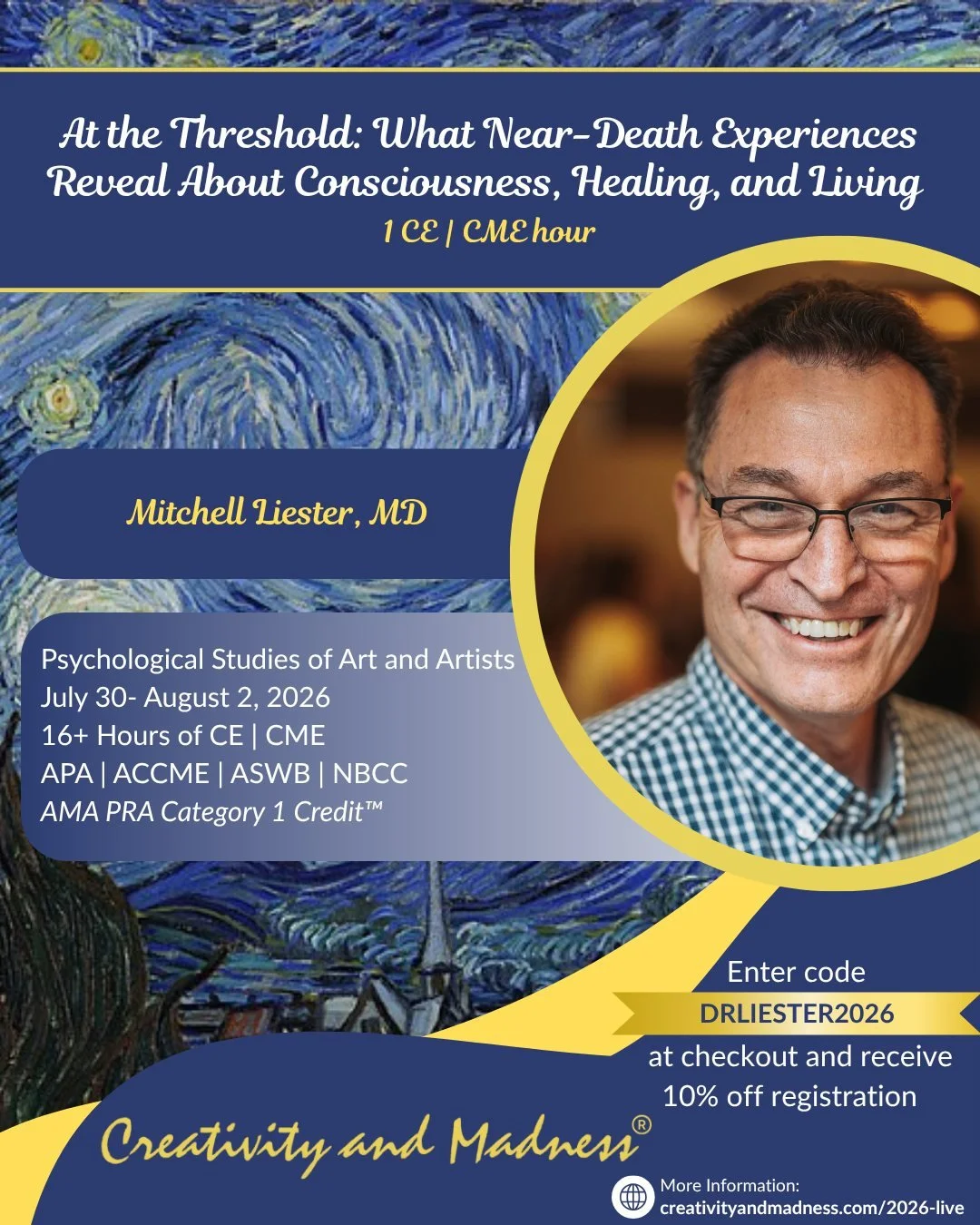
Mitchell B. Liester, M.D., is a board-certified psychiatrist and Assistant Clinical Professor in the Department of Psychiatry at the University of Colorado School of Medicine. He received his medical degree from the University of Colorado School of Medicine in 1985, completed his psychiatric residency at the University of California, Irvine, and served as Chief Resident. He has maintained a private practice in Monument, Colorado for over 34 years.
Dr. Liester's interest in psychiatry originates from a deep fascination with altered states of consciousness, whether triggered spontaneously by near-death experiences or through other means. His grandfather's near-death experience, which occurred while Dr. Liester was still a medical student, first introduced him to this realm and shaped a research career spanning more than three decades. His work encompasses consciousness, near-death experiences, indigenous healing practices, biological psychiatry, and psychedelic medicines. He has also investigated the phenomenon of cellular memory, exploring how personality changes following heart transplantation may point to memory stored beyond the brain itself. He has published widely in peer-reviewed journals, contributes regularly to Psychology Today, and served as Vice President of the International Association for Near-Death Studies. To investigate indigenous healing practices, he has journeyed to the Himalayas, Hawaii, Bali, Fiji, and the Andes and Amazon rainforest of South America.
-
Description
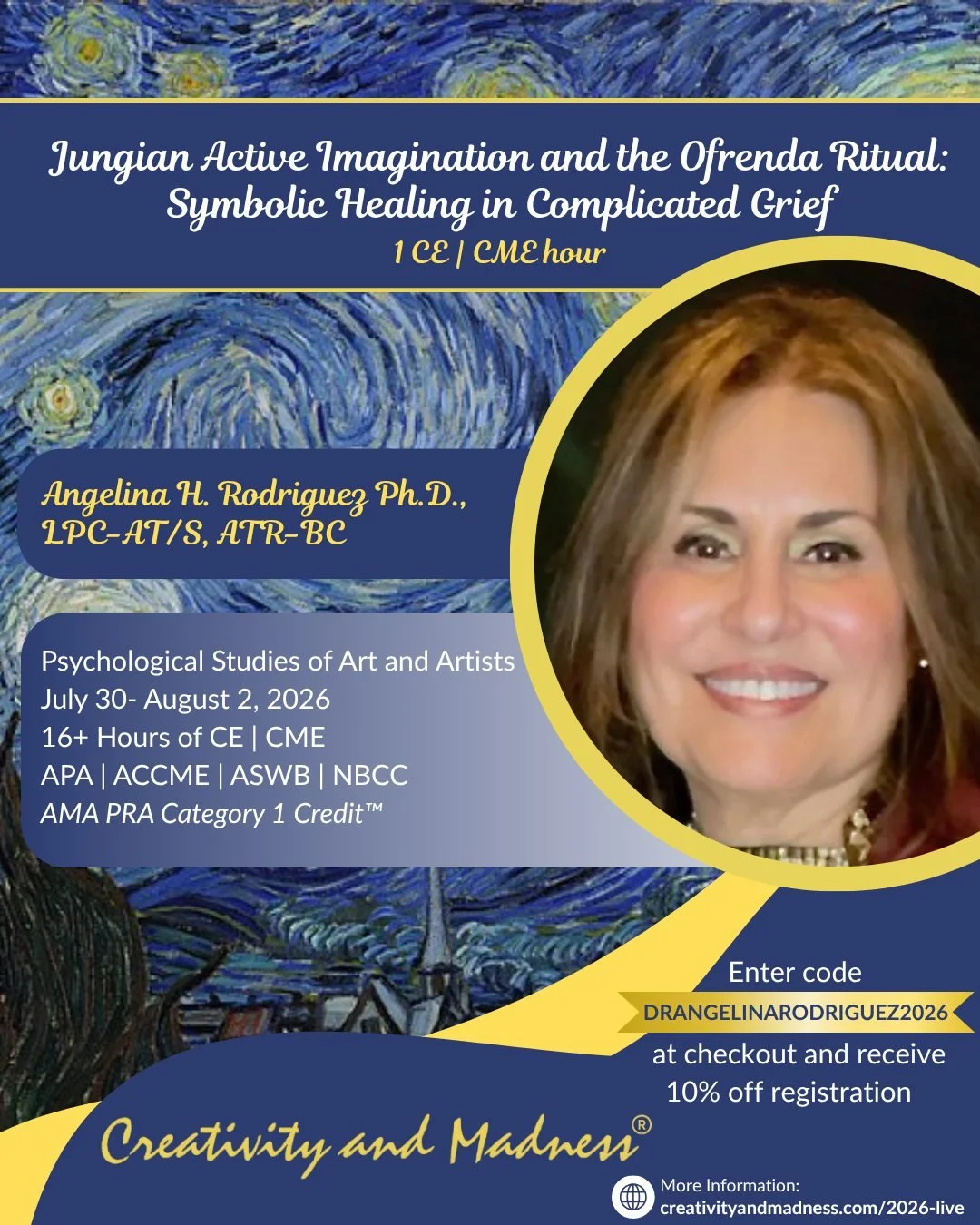
What if an ancient ritual could open a doorway to healing that modern therapy alone cannot reach?The ofrenda, a sacred altar tradition rooted in Mexican culture, is far more than a cultural ceremony. It is a profound act of symbolic communication between the living and the dead, and a powerful vehicle for psychological transformation. For those navigating complicated grief, it may offer something deeply needed: a way to reconnect, remember, and heal.
In this evocative and clinically meaningful session, participants are introduced to a Jungian art-based inquiry into the therapeutic power of the ofrenda ritual. Drawing from active imagination, archetypal imagery, and symbolic artmaking, this presentation explores how the ritual process of constructing an ofrenda helped participants integrate loss, restore ancestral connection, and experience genuine emotional renewal.
Research findings reveal how this ancient practice functions as a living mandala, bridging conscious and unconscious processes and creating a sacred space where grief can be witnessed, expressed, and transformed. For clinicians, educators, and anyone touched by loss, this session offers both inspiration and practical tools for integrating ritual and art into therapeutic grief work.
Ancient wisdom and modern psychology meet in this deeply moving exploration of how creativity and culture can heal the human heart.
Learning Objectives: At the end of this presentation, participants will be able to:
Describe the cultural and psychological significance of the ofrenda ritual and its role in addressing complicated grief.
Identify therapeutic benefits of symbolic and archetypal artmaking
Apply strategies for integrating ritual and symbolic art-based approaches into clinical grief work and therapeutic practice.
Angelina H. Rodriguez, Ph.D., is a Houston-based depth psychologist and psychotherapist who brings a creative perspective and integrative approach to healing, incorporating the principles of Depth Psychology with talk therapy and art therapy. She holds a Ph.D. in Depth Psychology from Pacifica Graduate Institute in Santa Barbara, California, and is a Licensed Professional Counselor/Supervisor and Registered Board-Certified Art Therapist with over two decades of clinical experience.
Her Jungian-informed approach blends depth-oriented insight with therapeutic dialogue, creative art processes, dreamwork, and mindful practices, helping clients move through grief, anxiety, depression, addiction, and major life transitions. She is the founder of Psychotherapy by Angelina and has served clients spanning immigration evaluations, grief work, substance recovery, and trauma healing in both English and Spanish.
Dr. Rodriguez has conducted extensive research on the ofrenda ritual, a traditional practice of honoring the deceased through art and symbol, exploring its role in grief, healing, and the psychology of death. Her documentary, "The Ofrenda Ritual: Bridging Art and Death," follows the healing journeys of participants in her workshops, which have been described as "extremely effective, memorable, and transformational." She has served the community as a therapist at M.D. Anderson Cancer Center, counseling patients with terminal cancer and their grieving families, and volunteered as a crisis counselor during the September 11th crisis in New York City.
A professional artist for over 25 years, Dr. Rodriguez's paintings and murals can be found in private residences and businesses throughout the country, and her work has been displayed in prestigious galleries and museums. She has presented at local, state, and national conferences and has been featured on Fox 26, ABC 13, KHOU Channel 11, the Houston Chronicle, among other media.
-
Description
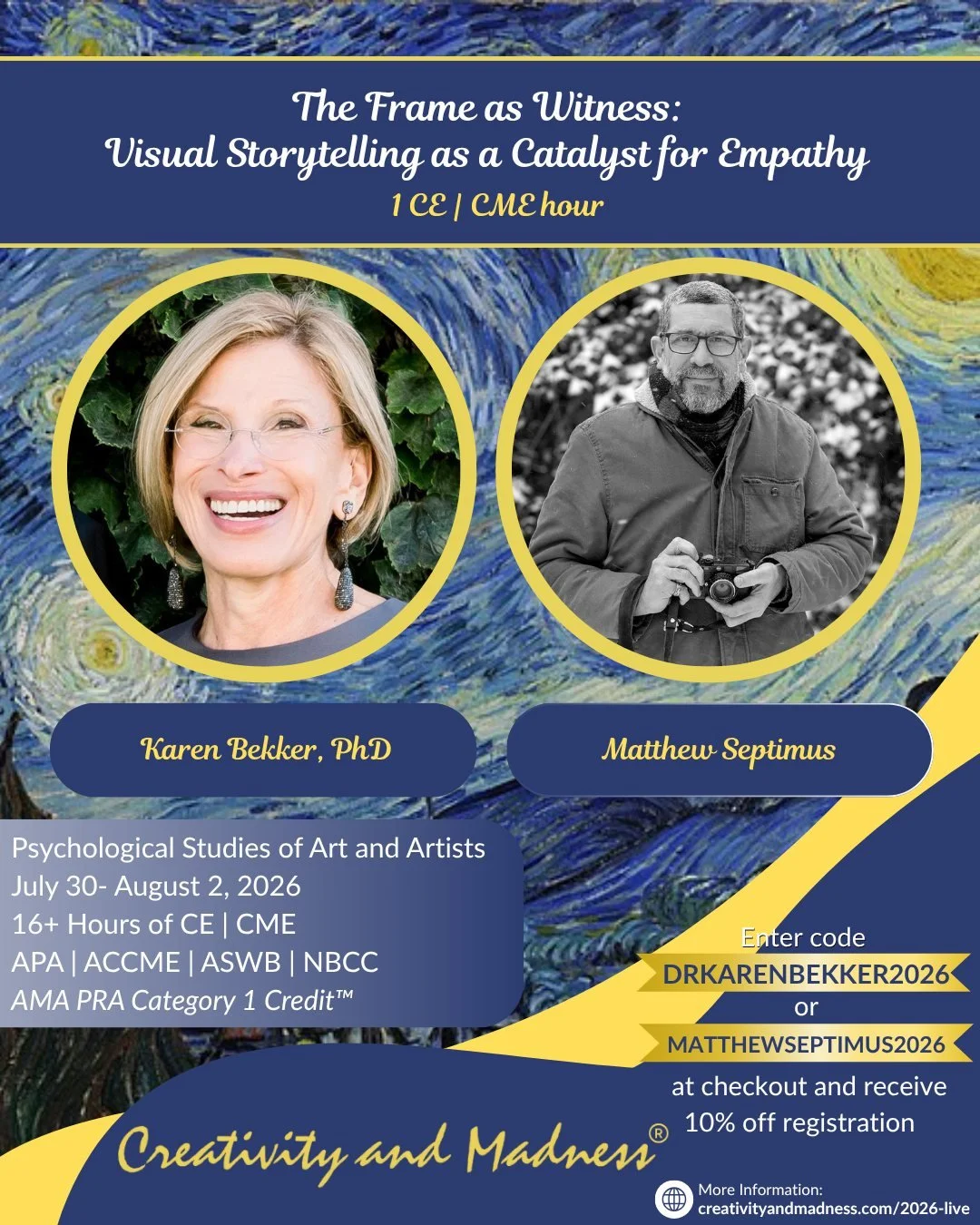
A single photograph can change the way we see the world and the people in it.Photography is one of humanity's most powerful tools for social advocacy and cultural witness. It preserves emotion, captures lived experience, and gives voice to communities whose stories are too often overlooked. For mental health and medical professionals, visual storytelling offers a compelling pathway to expanding cultural competence, deepening empathic attunement, and developing a more nuanced understanding of the social determinants that shape the lives of those we serve.
In this clinically relevant session, Dr. Karen Bekker and photographer Matthew Septimus bring together the worlds of art, social justice, and mental health. Through Septimus's documentary portraits of Occupy Wall Street participants, they examine how photography amplifies marginalized voices, challenges systemic assumptions, and bears witness to collective trauma, resilience, and the human capacity for recovery.
This session offers a framework for integrating visual narrative into clinical awareness, supporting cultural sensitivity, trauma-informed perspective-taking, and reflective practice, with particular attention to how systemic inequity and social displacement affect psychological well-being.
Learning Objectives: At the end of this presentation, participants will be able to:
Discuss how documentary photography can reveal vulnerability and resilience in both individual and communities.
Explain the role of visual storytelling as a catalyst for empathy.
Identify ways in which photography and the arts can be used to support mental health education and awareness around social justice and collective trauma
Dr. Karen Bekker is a licensed psychologist with over four decades of clinical practice in New York and New Jersey. She earned her B.A. in Psychology from Connecticut College, her M.A. in Psychology from New York University, and her Ph.D. in Psychology from the Graduate Faculty for the Social Sciences at the New School for Social Research. She also completed a Post-Doctoral Fellowship in Epidemiology at the Columbia University School of Public Health. Her current private practice focuses on anxiety, stress, trauma, chronic pain, depression, PTSD, and developmental disabilities.
Dr. Bekker's career spans research, clinical practice, administration, and teaching. She conducted early research at NYU Medical Center, Rockefeller University, and the Albert Einstein College of Medicine, with clinical work in neonatal units at Harlem Hospital and the Rose Kennedy Center. She was founder and Clinical Director of A Starting Place, Inc., an innovative therapeutic preschool serving approximately 250 children with disabilities and their families. She has published in peer-reviewed journals on early intervention and advocacy for children with disabilities, and taught psychology at Bergen Community College, Dominican College, Montclair State University, and Adelphi University. A longstanding interest in emotion and the visual process in art has led Dr. Bekker to published scholarship on the lives and works of Vincent Van Gogh, Paul Cezanne, and Mark Rothko, with presentations at professional conferences across the United States and internationally.
Matthew Septimus is a New York-based photographer educated at New York University and Parsons School of Design, with over thirty years of professional experience. His work spans portraits, performance, documentary, and culinary photography, reflecting a lifelong commitment to capturing the emotional lives of people and places. His clients have included the New York Times, MoMA PS1, Rockefeller University, Memorial Sloan Kettering, Columbia University, and Mount Sinai Hospital. For the PBS television series "Chef's Story," Septimus followed 27 master chefs from the studio set to their kitchens across the country, and his culinary photography for the French Culinary Institute has earned James Beard Award recognition.
Equally dedicated to photography as a tool for social connection and advocacy, he has taught the craft to at-risk youth in the South Bronx, developmentally disabled adults in Brooklyn, Central American immigrants on Long Island, and elderly residents of Manhattan's Lower East Side, with teaching affiliations at the International Center of Photography and The New School. His documentary work, including his portraits of Occupy Wall Street participants, reflects a deep commitment to amplifying marginalized voices and bearing witness to pivotal moments in history.
-
Description
What does it take to repair a relationship after it has been wounded? Love alone is not enough. It takes courage, skill, and the willingness to do something most of us were never taught how to do well: apologize meaningfully and forgive genuinely.In this rich and clinically grounded presentation, Deborah Levinson explores apology and forgiveness as two sides of the same coin, and as among the most powerful tools available for relational healing. Drawing on the vivid metaphor of a tree, she invites participants to consider how relationships, like living things, require intentional tending. Just as a skilled arborist prunes dead wood to restore vitality and growth, couples and families can learn to identify and release the unhealthy patterns that quietly erode their bonds, making space for deeper connection and renewed love.
Grounded in Gottman's Love Map and a practical toolbox of conflict negotiation skills, this presentation offers clinicians a clear, immediately applicable framework for facilitating meaningful apology and genuine forgiveness. Whether you work with couples, families, or parent-child relationships, you will leave with concrete tools to help your clients repair what matters most
Learning Objectives: At the end of this presentation, participants will be able to:
Apply evidence-informed skills for negotiating conflict in couple and parent-child relationships in clinical practice.
Describe the five dimensions of apology and how each dimension supports relational repair
Discuss the tree-and-pruning metaphor as a tool to release harmful relational patterns.
Deborah Levinson, LCSW, is a Johns Hopkins and Catholic University-trained licensed clinical social worker with more than four decades of experience helping individuals, couples, and families navigate life's most profound transitions. Her clinical work has long centered on the healing potential embedded in human relationships, with particular expertise in the therapeutic dimensions of apology, forgiveness, and relational repair.
Mrs. Levinson is best known for developing the Spousal Loss Model, a clinically researched framework for rebuilding identity and purpose after major loss. Over the course of her career, she has come to understand forgiveness not as a simple act of letting go, but as one of the most powerful and complex interventions available in clinical practice. She has facilitated groups for widowed and divorcing individuals through the Jewish Board of Family and Children Services in New York and has presented to professional audiences at Columbia Presbyterian Hospital, Mt. Sinai Hospital, the Gerontological Society of America, and the United States Secret Service Employee Assistance Program, among others.
She is the author of three books, including her widely used workbook Surviving the Death of Your Spouse (New Harbinger, 2004), and has published clinical research in peer-reviewed journals including the Journal of Personal and Interpersonal Loss and Illness, Crisis and Loss.
A member of Phi Beta Kappa and Pi Lambda Theta, Mrs. Levinson brings decades of clinical wisdom, scholarly grounding, and genuine warmth to her exploration of the transformative power of love expressed through apology and forgiveness.
*Optional Workshop (2 pm-5pm, MDT)
AUGUST 1, 2026
*Optional Workshop (2 pm-5pm, MDT)
*Open to All Registered Attendees | Complimentary (8:00 AM – 8:45 AM MDT)
AUGUST 2, 2026
*Optional Workshop (2 pm-5pm, MDT)
*Open to All Registered Attendees | Complimentary (8:00 AM – 8:45 AM MDT)
CHOOSE YOUR EXPERIENCE
Both options include 16 CE/CME hours
LIVE REGISTRATION
LIVE REGISTRATION AND POST CONFERENCE VIDEOS
NEED FEWER HOURS? REGISTER FOR WORKSHOPS ONLY!
WORKSHOP REGISTRATION
If you are only registering for the workshop and want a CE certificate add that to your cart at checkout.
ONE WORKSHOP
TWO WORKSHOPS
THREE WORKSHOPS